British etiquette at work and beyond: A guide for employees moving to the UK
Author: MovePlus Research Desk

Moving to the UK for work brings plenty of practical tasks, from visas to housing. Alongside them sits something less tangible but just as important: understanding the everyday customs that shape how people communicate, work together and socialise. British etiquette is rarely written down, and much of it is learned through observation. A little preparation can help you and your family feel confident from your first week.
This guide offers a practical introduction to British etiquette in the workplace and in daily life. The UK is home to people from a huge range of backgrounds, and customs vary between England, Scotland, Wales and Northern Ireland, between cities and rural areas, and between individuals. The best approach is to stay curious, observe and ask when you are unsure. Most people will be happy to help.
What is British etiquette?
Etiquette simply means the shared expectations about polite behaviour in a particular setting. In the UK, many of these expectations centre on courtesy, consideration for others, respect for personal space and a fairly understated communication style. None of these are unique to Britain, but the way they show up in daily life can differ from what you are used to.
How do people communicate at work in the UK?
1. Is British communication direct or indirect?
Workplace communication in the UK often leans towards politeness and diplomacy. Colleagues may soften requests or feedback with phrases such as “Would you mind…”, “It might be worth considering…” or “I wonder if we could…”. These phrases are often genuine requests or suggestions, even when they sound tentative. If you are used to a more direct style, it can help to listen carefully for the intent behind the words, and to ask for clarity if you need it. Asking “Just to check, would you like me to change this before Friday?” is perfectly acceptable.
2. How is feedback usually given?
Feedback is frequently delivered with balance, highlighting what has gone well before discussing what could improve. Understatement is common, so “That is not quite what we were after” may signal a more significant concern than it first appears. Many UK organisations are actively encouraging clearer feedback, and practices differ widely between employers, so take your lead from your manager and team.
3. What role does humour play?
Humour, including light self-deprecation and gentle irony, is a common way to build rapport in many British workplaces. You do not need to join in straight away. If a comment is unclear, it is fine to smile and ask. Over time, you will get a feel for the tone of your team.
What are the norms for meetings and punctuality?
- Arrive on time. Punctuality is generally valued for meetings. If you are running late, a short message to let people know is appreciated.
- Expect an agenda. Many meetings follow an agenda and finish with agreed actions. It is common to send a brief summary afterwards.
- Take turns to speak. Interrupting is usually avoided. If you want to contribute, a small gesture or a phrase such as “Could I add something?” works well.
- Small talk first. Meetings often begin with a minute or two of informal conversation about the weekend, travel or the weather before moving to business.
How do people address each other at work?
Most UK workplaces use first names, including when speaking to senior colleagues. In more formal sectors or with external clients, you may start with a title and surname until invited to use a first name. Handshakes are a common greeting in business settings, particularly on first meeting. Social kisses are less usual at work. If you are unsure, follow the other person’s lead.
What is the etiquette around work and personal time?
Many people in the UK value a clear boundary between work and personal life. Emails outside working hours may not receive an immediate reply, and this is quite normal. Statutory annual leave entitlements mean colleagues regularly take time off, and planning around leave is normal. Flexible and hybrid working are widespread, and your employer will have its own policies on where and when you work.
What about after-work socialising?
Team lunches, coffee breaks and after-work gatherings are common ways to get to know colleagues. In some teams, socialising takes place in a pub, but there is no expectation that you drink alcohol. Soft drinks are always available, and choosing not to drink is widely accepted. If someone offers to buy a round, it is customary to offer to buy the next one, though this is relaxed in larger groups.
What should you know about everyday etiquette in the UK?
Queuing
Queuing in order is a strongly held norm, whether at a bus stop, a shop counter or a coffee shop. Joining the back of the queue and waiting your turn is expected. If you are unsure where a queue starts, simply ask.
Please, thank you and sorry
Saying “please” and “thank you” is part of almost every interaction, including with shop staff, drivers and colleagues. “Sorry” is used very widely, often as a way of saying “excuse me” or of acknowledging a minor inconvenience, even when no one is at fault.
Public transport
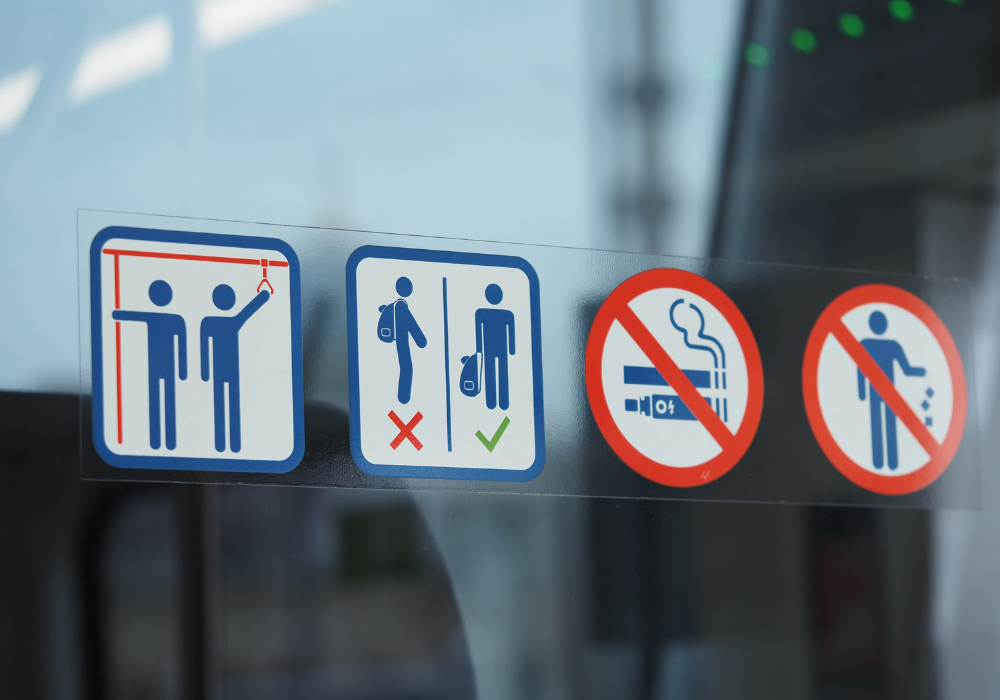
On busy trains and buses, people tend to keep conversations quiet and phone calls brief. On escalators in London and some other cities, people stand on the right so others can pass on the left. Offering your seat to someone who needs it more is appreciated.
Personal space and privacy
People generally keep a little more physical distance in conversation than in some other cultures. Questions about salary, age or personal finances are usually avoided with people you have only just met. Conversation tends to start with neutral topics such as travel, the local area, sport, television or the weather.
Tipping
In restaurants, a tip of around 10 to 15% is common if a service charge has not already been added to the bill. Check the bill first, as many restaurants include a discretionary service charge. Tipping in pubs when ordering at the bar is not expected. Taxi drivers are often given a small tip or the fare is rounded up.
How can families settle in socially?
For partners and children, settling in socially is often what makes a move feel like home. Some ideas that help:
- Get involved at school. School gates, parents’ associations and after-school clubs are good places to meet other families.
- Join local groups. Sports clubs, community centres, faith groups, libraries and volunteering organisations offer a natural way to meet people.
- Say hello to neighbours. A friendly greeting goes a long way. Neighbours may not introduce themselves straight away, so taking the first step is welcome.
- Accept invitations. If you are invited to someone’s home, it is usual to arrive close to the agreed time and to bring a small gift such as flowers, chocolates or a drink.
How can you prepare before you move?
Cultural preparation works best alongside the practical side of your move. A few steps can help you start well:
- Ask your employer whether cross-cultural training is available as part of your relocation package.
- Talk to colleagues who have relocated to the UK before. Their experiences are often the most useful.
- Explore your new local area online, including community groups and events.
- Work through the practical tasks early so you have more energy for settling in. Read our guide: Relocation checklist: everything you need to know.
- If you plan to drive, read up on licence rules before you arrive. Read our guide: Exchanging your driving licence when you relocate to the UK
Frequently asked questions
1. Is it rude to be direct in a British workplace?
No. Clear communication is valued, and many teams welcome it. Pairing directness with courtesy, such as “please” and “thank you”, usually lands well.
2. Do people in the UK use first names at work?
Yes, in most workplaces. In formal settings or with new clients, you may begin with titles until invited to use first names.
3. Do I have to drink alcohol at work social events?
Not at all. Choosing soft drinks is common and accepted, and many work events now include non-alcoholic options.
4. How much should I tip in the UK?
Around 10 to 15% in restaurants is common if no service charge has been added. Tipping at the bar in pubs is not expected.
5. Is British etiquette the same everywhere in the UK?
No. Customs vary between nations, regions, cities and communities, and between individual workplaces. Observing and asking is always the best approach.
Feeling at home in the UK
Every country has its own unwritten rules, and nobody expects you to know them all on day one. Courtesy, curiosity and a willingness to ask questions will carry you a long way. If your employer works with MovePlus Mobility, our destination services team can help you and your family settle in, from finding a home to understanding life in your new community. Speak to your HR or mobility contact to find out what support is available.
MovePlus Research Desk
AuthorRecent Blogs
- British etiquette at work and beyond: A guide for employees moving to the UK
- Intra-company transfer visa for the UK: A 2027 guide for HR and global mobility teams
- Corporate housing: How to choose temporary accommodation for relocating employees
- Exchanging your driving licence when you relocate to the UK
- UK Right to Rent checks for relocating employees: A guide for HR teams
Ready to Transform Your Global Mobility Strategy?
Connect with our mobility experts to discuss how MOVEPLUS™ can streamline your international talent management and relocation processes.