Moving to Germany: A 2026 guide for relocating employees and expats
Author: MovePlus Research Desk

Moving to Germany starts with the same paperwork for everyone. The visa route, the address registration, the housing search, the bank account, the health cover and the tax basics are the same milestones whether you arrive as a single professional or with a family. Where you diverge is settling in, and a family carries extra work here, from finding school places and childcare to choosing a neighbourhood that suits children as well as commuting.
This guide walks you through each step in the order you will meet it in 2026, with the practical detail newcomers say they wish they had known, the portals and official pages you will actually use, and separate settling-in advice for individuals and for families. Where a company relocates you, some of these steps are coordinated on your behalf, and the final section explains what that looks like.
Moving to Germany in 2026: what to expect
A move to Germany follows a clear sequence, and the order matters because each step tends to unlock the next. Your address registration produces the certificate you need for your tax number, your bank account and your health cover, so a delay early on holds up everything that follows. Our expat checklist covers everything to organise before and after the move in a structured, phase-by-phase format.
Germany has reshaped its immigration system in recent years to attract skilled professionals, which has widened the routes in and simplified parts of the process. The country still runs on documents, though, so the newcomers who settle fastest are the ones who prepare their paperwork in advance and book the busy appointments as early as they can. For more on why Germany is drawing global talent, see our article on why India’s tech talent is choosing Germany over Silicon Valley.
Work visas and permits for Germany
A work visa or residence permit is your legal basis to live and work in Germany, and the right route depends on your qualifications, your job and your circumstances. Citizens of the European Union, the European Economic Area and Switzerland do not need a visa and can live and work freely. Everyone else applies through one of the routes below.
The main 2026 routes are set out here so you can see which fits your situation. An immigration lawyer confirms the correct route and handles the application, particularly where your qualification needs to be recognised.
| Route | Who it is for and what to know |
|---|---|
| EU Blue Card (Blaue Karte EU) | For university graduates with a qualifying job offer that meets a salary threshold, around 50,700 euros gross a year in 2026, or around 45,934 euros for shortage occupations such as IT, engineering and healthcare. One of the fastest routes to settlement, in 21 to 27 months depending on your German level, and a spouse can work without restriction. |
| Skilled Worker visa | For applicants with a recognised academic or vocational qualification and a job offer. There is no high salary threshold, so recognition of your qualification is the key requirement. It covers a wide range of professions. |
| Opportunity Card (Chancenkarte) | A points-based job-seeker route introduced in 2024, letting skilled professionals enter for up to 12 months to look for qualified work without a job offer. Points come from qualifications, experience, language and age, and part-time work of up to 20 hours a week is allowed while you search. |
| Experienced professional route | For applicants with strong practical experience where formal recognition is only partial, often through a recognition partnership arranged with an employer. |
| Research visa | For researchers and scientists with a hosting agreement or contract with a research institution in Germany. |
If your company is moving you to Germany from an office abroad, you will usually travel on an Intra-Corporate Transfer permit, the ICT Card, which applies when you transfer within the same group of companies. In that case your employer and its immigration lawyer typically select the route and manage the application, so much of this step is handled for you. Salary thresholds are reviewed each year, so check the current figure when you apply.
For a detailed breakdown of each permit category, eligibility requirements and application timelines, see our dedicated work permits for Germany guide.
Useful official links
- Make it in Germany, the Federal Government skilled worker portal: https://www.make-it-in-germany.com
- German Federal Foreign Office, visa information and appointments: https://www.auswaertiges-amt.de
- Recognition of foreign qualifications: https://www.anerkennung-in-deutschland.de
Registering your address (Anmeldung)
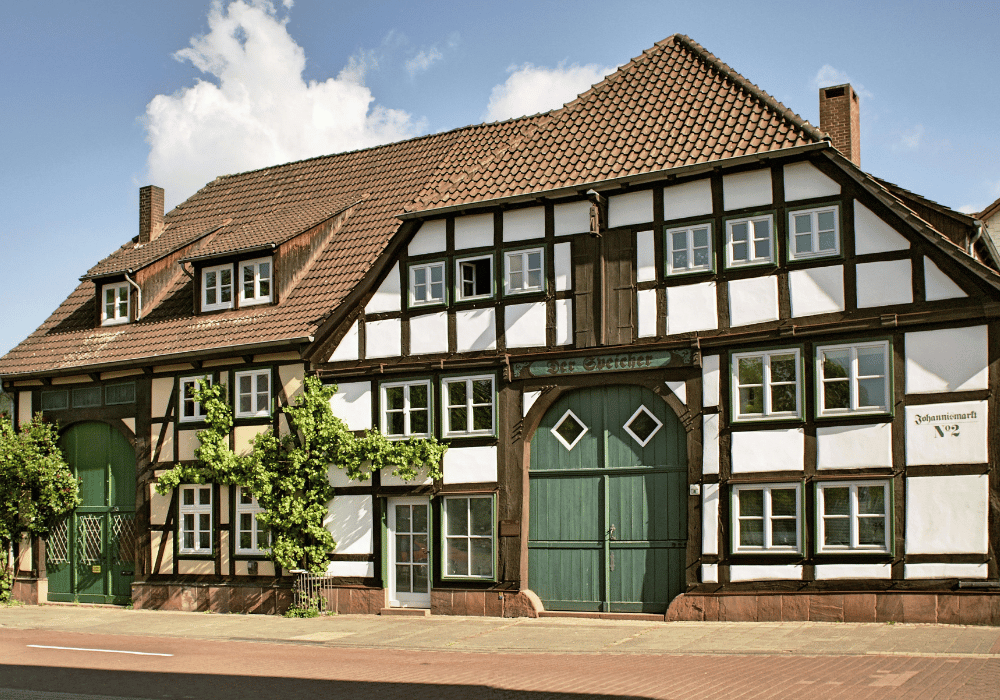
Anmeldung is the mandatory registration of your home address with the local authority, and it is the step that everything else depends on. You register at your local citizens’ office, the Bürgeramt, usually within two weeks of moving in, and you will need your passport, your tenancy details and a signed confirmation from your landlord called the Wohnungsgeberbestätigung.
In return you receive a registration certificate, the Meldebescheinigung. Keep the original safe, because you will need it for your tax number, your bank account, your health cover and your residence permit. Appointments fill up fast in the larger cities, sometimes weeks ahead, so book yours online as soon as you have a move-in date. Newcomers on forums such as Reddit repeatedly say the same thing here: book the appointment early, and confirm before you sign any tenancy that the landlord will provide the Wohnungsgeberbestätigung, because without it you cannot register at all.
Useful official links
- Find your local citizens’ office, for example Berlin: https://service.berlin.de
Finding somewhere to live
The rental search is where most newcomers spend the most effort, and it moves fast in the larger cities, where good listings can disappear within hours. Treat it like a competitive job application: prepare your documents first, set up alerts, and respond within minutes when something suitable appears.
Rent is quoted either as cold rent, the Kaltmiete, which is the base rent before utilities, or warm rent, the Warmmiete, which adds heating and service charges. Landlords commonly ask for a deposit of up to three months of cold rent, proof of income, and a German credit report called a SCHUFA. If you have just arrived and have no SCHUFA record yet, offer alternatives such as your signed employment contract, recent bank statements or an employer letter confirming your role.
Where your employer provides a housing allowance or arranges support through a destination services provider, home search, viewings and paperwork may be organised for you, which is a significant advantage in a tight market.
- Start with the main portals: ImmoScout24 and Immowelt for whole apartments, and WG-Gesucht for rooms in a shared flat, known as a WG.
- Consider a furnished short-term rental for your first weeks through sites such as Wunderflats or HousingAnywhere, which gives you a valid address for your Anmeldung while you search locally from a stronger position.
- A WG is often the easiest first foothold, since flatmates choose on fit rather than a credit file, the deposit is usually lower, and rooms come furnished.
- Check Kleinanzeigen for private listings, and look at city Facebook groups such as the housing groups for Berlin, Munich or Hamburg, where rooms sometimes appear before the main portals.
- Prepare a single application folder, the Bewerbungsmappe, with your passport, employment contract, recent payslips or a bank statement, and your SCHUFA or an alternative, ready to send as one PDF.
- Never transfer a deposit or rent before you have seen the property in person and signed a contract. A listing that asks for money upfront while the landlord is conveniently abroad is a scam.
- Confirm the listing allows Anmeldung before you commit, since a home you cannot register at leaves you unable to complete any of the later steps.
Opening a German bank account
A German bank account is needed to receive your salary and to set up rent and regular payments, most of which run through the SEPA direct debit system. You can choose between established high street banks and app-based digital banks, several of which offer English-language onboarding.
To open an account you will usually need your passport, your registration certificate and, in many cases, your tax identification number. Some accounts require your Anmeldung to be complete first, which is one more reason to register your address promptly.
Healthcare and insurance

Health insurance is compulsory in Germany and needs to be in place from the day your employment begins, so it is one of the first things to arrange. There are two systems. Statutory health insurance, the gesetzliche Krankenversicherung, covers most employees, with contributions based on income and shared with your employer. Employees earning below a threshold, around 77,400 euros a year in 2026, are in the statutory system by default, while higher earners may opt for private health insurance, the private Krankenversicherung.
Within the statutory system you choose your own fund, a Krankenkasse, and the largest and most commonly recommended for English speakers include TK, AOK and Barmer. You can usually apply online with your passport and your registration certificate, and your fund then registers you for a social security number, the Sozialversicherungsnummer, and issues your health insurance card. Newcomers often note that sorting insurance early is what unlocks a smooth start, since you cannot register with many doctors or complete your residence permit without it.
For a broader guide to the range of insurance products expats need when living abroad, see our guide on insurance for expats.
Useful official links
- Techniker Krankenkasse (TK): https://www.tk.de
- AOK: https://www.aok.de
- Barmer: https://www.barmer.de
- Deutsche Rentenversicherung, for your social security number: https://www.deutsche-rentenversicherung.de
Understanding German tax basics
Income tax in Germany is deducted directly from your salary as Lohnsteuer, and how much reaches your account each month depends in part on your tax class. Germany has six tax classes, and the one that applies to you is based on your marital and family situation.
| Tax class | Generally applies to |
|---|---|
| I | Single, or permanently separated, with no dependent children in the household |
| II | Single parents entitled to the relief for lone parents |
| III | Married, where one partner earns considerably more and the other uses class V |
| IV | Married, where both partners earn a similar income |
| V | Married, paired with a partner on class III |
| VI | Applied to a second and any further employment |
You will be issued a tax identification number, the Steuer-ID, an 11-digit number sent to you by post around two to four weeks after your Anmeldung. Until you give it to your employer, you may be taxed temporarily at the highest rate under class VI, which is then corrected and refunded once your number comes through, so it is worth chasing early. Where you have income or obligations in more than one country, a tax adviser, a Steuerberater, advises on your specific position. Plan your budget around your net pay, the Nettolohn, rather than your gross figure.
For a detailed guide on how expatriate tax compliance works across jurisdictions, see our expatriate tax compliance guide.
Useful official links
- Federal Central Tax Office (BZSt), for your tax ID: https://www.bzst.de
Cost of living in Germany in 2026

Your cost of living in Germany depends heavily on the city you choose, with housing the single largest expense for most people. Mercer, ECA International and AIRINC all publish cost of living research that mobility teams use to compare locations, and the ranges below give an indicative picture for 2026. Treat them as a starting point and build your own budget around your city and lifestyle.
| Cost area | Indicative monthly range in 2026 |
|---|---|
| Rent, one-bed in Munich or Frankfurt | Around 1,500 to 2,000 euros cold rent in central areas, the most expensive markets |
| Rent, one-bed in Berlin or Hamburg | Around 1,200 to 1,600 euros, having risen sharply in recent years |
| Rent, one-bed in Leipzig, Dresden or smaller cities | Often under 800 euros, noticeably more affordable |
| Groceries, single person | Around 200 to 350 euros, higher in the pricier cities |
| Public transport | The nationwide Deutschland-Ticket costs 63 euros a month from January 2026 |
| Utilities and internet | In line with other major European cities, on top of cold rent |
Beyond these, a share of your gross pay goes towards health and social contributions. As a rough guide, a single person outside the most expensive cities often budgets somewhere between 1,800 and 2,500 euros a month all in, though this varies widely by household. The statutory minimum wage rises to 13.90 euros an hour in 2026, which matters if an accompanying partner takes up part-time work. Choosing where to live is, in practice, the most significant financial decision you make before you arrive, since a one-bed that costs 1,800 euros in Munich might cost around 700 euros in Leipzig.
Settling in as an individual
Settling in on your own is mostly about community, cost and how quickly you can build a social life, and your choice of city shapes all three. Many workplaces operate in English, though learning German through a government-supported integration course makes daily life easier and widens your circle.
Berlin offers the largest international community, an English-friendly social scene and a still-reasonable cost of living for a capital, which makes it a common first choice. Leipzig and Dresden are noticeably more affordable and have a growing creative and tech crowd, while Cologne is known for being sociable and welcoming. Munich and Frankfurt offer the strongest career markets, particularly in technology, finance and engineering, at a higher cost of living. Starting out in a WG is one of the fastest ways to meet people, and networks such as InterNations and local meetup and language-exchange groups help you build a circle quickly.
If you are weighing Germany against other European destinations, see our guides on living in the Netherlands as an expat and living in France as an expat for a practical comparison.
Settling in as a family

Settling in as a family adds schooling and childcare to the list, and these often drive both your timing and your choice of neighbourhood. State schools are free and of a high standard, though lessons are in German, so many relocating families choose international or bilingual schools for continuity in English, with fees that vary by city and school and places that can be limited, so it is worth applying early. For a broader look at how organisations structure family relocation support, see our guide on expat relocation: supporting employees and families abroad.
Childcare for younger children is provided through a Kita, and demand outstrips supply in the larger cities, so register your interest as soon as you can. Families are also entitled to child benefit, Kindergeld, a monthly payment claimed through the Familienkasse. On location, cities such as Munich, Düsseldorf, Hamburg and the Frankfurt area are popular with relocating families for their international schools, green space and safety, and many families choose suburbs with more room and an easier commute. Registering your children, securing a school or Kita place and finding a family doctor all take time, so start these conversations before you arrive.
For a full breakdown of how dependent visa applications work and what rights family members hold in the host country, see our guide on what happens to your dependent’s visa when you relocate for work.
Useful official links
- Child benefit (Kindergeld) through the Familienkasse: https://www.arbeitsagentur.de/familie-und-kinder
What happens when you move via a company as an assignee

If your employer relocates you to Germany as an assignee, most of the steps in this guide are coordinated for you rather than left to you to arrange alone. Companies often work with a relocation management company that brings together the immigration lawyer, tax adviser, destination services provider and household goods provider, so your visa, home search, registration and shipping connect in the right order. For a full breakdown of how international household goods moves work from pre-move survey to customs clearance and delivery, see our guide on moving household goods internationally.
The MOVEPLUS™ platform gives the mobility team a single view of your key dates, documents and approvals, which means fewer gaps for you to chase and clearer answers when a deadline or a document is due. The steps themselves are the same ones set out above, so even where support is in place, understanding the sequence helps you know what is happening and when. If you are moving on your own, that same understanding puts you in control, since you can plan each step knowing what depends on what.
MOVEPLUS™ coordinates every element of the relocation through our relocation service coordination offering from visa and immigration to home search support, household goods, and settling-in services for you and your family, all managed through a single dedicated Advocate.
Get in touch to find out how MovePlus can support your Germany relocation.
Frequently asked questions
1. Do I need a visa to work in Germany?
Citizens of the European Union, the European Economic Area and Switzerland can live and work in Germany without a visa. Everyone else needs a work visa or residence permit, such as the EU Blue Card, the Skilled Worker visa or the Opportunity Card, with the right route depending on your qualifications and job.
2. What is the first thing to do when I arrive in Germany?
Once you have somewhere to live, register your address at the local citizens’ office, the Bürgeramt, within about two weeks. This registration, the Anmeldung, produces the certificate you need for your tax number, your bank account and your health cover, so book the appointment early.
3. How do I get health insurance in Germany?
Health insurance is compulsory from your first day of work. Most employees join a statutory fund such as TK, AOK or Barmer, applying online with a passport and registration certificate. The fund then registers you for a social security number and issues your insurance card. Higher earners may opt for private cover.
4. How much does it cost to live in Germany in 2026?
It depends heavily on the city. A one-bed apartment ranges from around 1,500 to 2,000 euros in Munich or Frankfurt to under 800 euros in cities such as Leipzig. A single person outside the most expensive cities often budgets between 1,800 and 2,500 euros a month all in. The Deutschland-Ticket for public transport costs 63 euros a month.
5. Which German cities are best for families?
Cities such as Munich, Düsseldorf, Hamburg and the Frankfurt area are popular with relocating families for their international schools, green space and safety. State schools are free but taught in German, so many families choose international or bilingual schools and apply early, as places can be limited.
6. Can my family move to Germany with me?
Yes. Most work routes allow family reunification, and under the EU Blue Card a spouse can work without restriction. State schooling is free, childcare is available through a Kita, and families can claim monthly child benefit, Kindergeld, through the Familienkasse.
MovePlus Research Desk
AuthorRecent Blogs
- Moving to Germany: A 2026 guide for relocating employees and expats
- Best countries for expats in 2026: What the top destinations offer
- Insurance for expats: Which one to get?
- The expat checklist: What to organise before you move abroad
- Best countries for expat families: Education, safety, and quality of life
Ready to Transform Your Global Mobility Strategy?
Connect with our mobility experts to discuss how MOVEPLUS™ can streamline your international talent management and relocation processes.