Work permits for Germany: A guide for international employees
Author: MovePlus Research Desk

Germany operates one of Europe’s most structured immigration systems, designed to attract skilled professionals while maintaining clear regulatory frameworks. For international employees relocating to Germany for corporate assignments, understanding the work permit landscape is essential for a smooth transition.
The German system distinguishes between EU and EEA nationals (who generally do not require work permits) and third-country nationals (who require specific work and residence authorisations). This guide focuses on the primary pathways available to skilled professionals from outside the European Economic Area joining German employers or transferring to German offices.
For a comprehensive overview of how visa and work permit requirements apply across corporate mobility programmes, see our HR guide to visa and work permit requirements for corporate employees
While your employer and immigration adviser manage the legal aspects of your application, this resource provides practical context on what to expect throughout the process.
For a broader look at what life in Germany looks like for relocating professionals beyond the visa process, see our guide on moving to Germany.
Common work permit categories for skilled professionals
EU Blue Card

The EU Blue Card is the most common pathway for highly qualified professionals relocating to Germany. This residence permit is designed for individuals with recognised university degrees and a confirmed job offer meeting minimum salary thresholds. For more on why Germany is drawing global talent, see our article on why India’s tech talent is choosing Germany over Silicon Valley.
To qualify, you must hold a recognised degree (German or internationally equivalent), have a binding job offer or employment contract, and meet the annual gross salary threshold (which is adjusted regularly and varies for shortage occupations such as IT, engineering, and healthcare). The EU Blue Card is typically issued for up to four years or the contract duration plus three months, whichever is shorter.
The EU Blue Card offers several advantages, including accelerated permanent residence eligibility (after 33 months with German language proficiency or 21 months with advanced German language skills), freedom to travel within the Schengen Area, and easier family reunification for spouses and dependent children.
Skilled Workers Immigration Act provisions
Germany’s Skilled Workers Immigration Act (Fachkräfteeinwanderungsgesetz) introduced streamlined pathways for qualified professionals with vocational training or university degrees. This framework applies to individuals whose qualifications are recognised in Germany and who have a concrete job offer.
Applicants with recognised vocational qualifications or university degrees can apply for residence permits for employment purposes. The position must match the applicant’s qualifications, and in most cases, approval from the Federal Employment Agency is no longer required if the role is on the shortage occupation list.
Processing times vary depending on the German mission abroad where you apply, but the Skilled Workers Immigration Act aims to expedite decisions for qualified candidates.
Intra-corporate transfer permit
For employees transferring from a foreign office to a German branch, subsidiary, or affiliate within the same corporate group, the ICT (Intra-Corporate Transfer) permit provides a dedicated pathway. This permit is aligned with EU Directive 2014/66/EU and is designed for managers, specialists, and trainees on temporary assignments.
To qualify, you must have worked for the company abroad for at least three to six months (depending on the role) immediately prior to the transfer, and the German entity must have a qualifying corporate relationship with the foreign entity. ICT permits are granted for the duration of the assignment, up to three years for managers and specialists or one year for trainees.
ICT permit holders benefit from simplified mobility within the EU under certain conditions — for how this works in neighbouring jurisdictions, see our guides on work permits for the Netherlands and work permits for France.
Application process and timeline
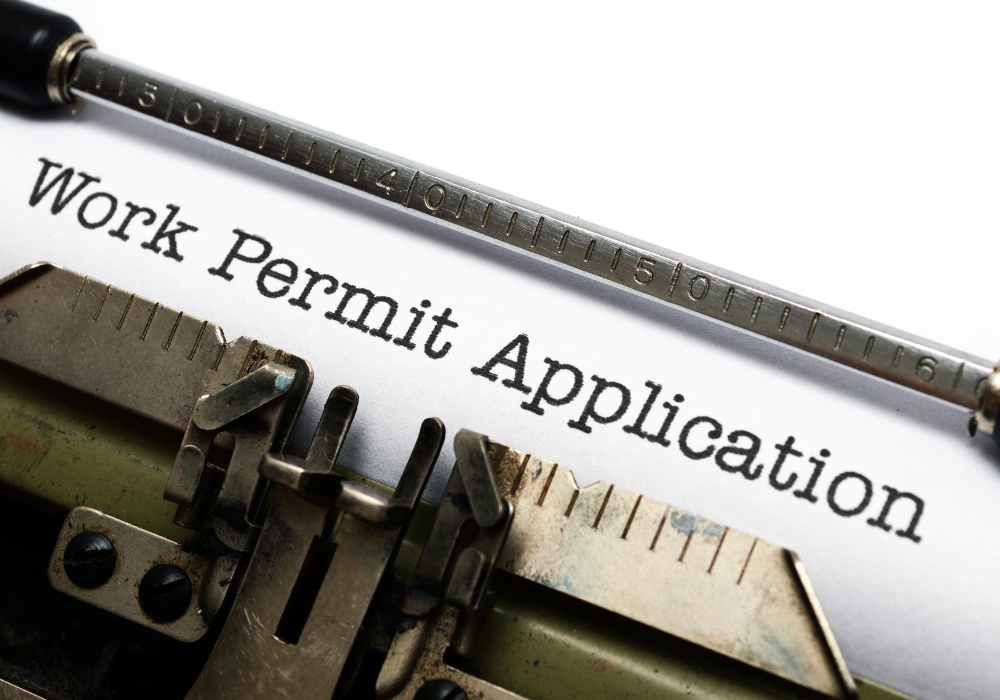
Work permit applications for Germany are typically submitted at the German embassy or consulate in your home country. Your employer may need to provide supporting documentation, including the employment contract, proof of qualifications, and evidence of salary compliance.
Standard processing times range from six to twelve weeks, though this can vary significantly depending on the mission and the complexity of the application. Appointments at some German missions abroad have lengthy waiting periods, so early planning is essential.
For a full framework covering how organisations manage international employee moves from assignment structuring through to arrival, see our guide on how to move employees from one country to another.
Once your visa is approved, you will receive a national visa (Category D) allowing you to enter Germany. Upon arrival, you must register your address at the local registration office (Bürgeramt) and apply for your residence permit card at the Foreigner Authority (Ausländerbehörde).
Family reunification and dependent permits
Spouses and minor children of work permit holders are generally eligible for family reunification permits. Spouses of EU Blue Card holders and Skilled Worker permit holders are automatically granted work authorisation in Germany without additional approvals.
Family members must apply for their visas at the same time or after the primary applicant has obtained their residence permit. Processing times for family reunification visas can be substantial at certain missions, so concurrent applications are recommended where possible.
For a detailed breakdown of how dependent visa applications work and what rights dependants hold in the host country, see our guide on what happens to your dependent’s visa when you relocate for work.
Compliance and residence obligations
All residence permit holders must register their address within two weeks of moving to a new residence in Germany. This registration (Anmeldung) is mandatory and required to access essential services, open bank accounts, and renew permits.
Work permits in Germany are typically tied to a specific employer and role. Changing employers or roles may require notification to the Foreigners’ Authority and, in some cases, an amended permit. Holders of EU Blue Cards have more flexibility after a defined period.
For a detailed guide on how expatriate tax compliance works across jurisdictions, see our expatriate tax compliance guide.
Maintaining valid health insurance coverage is mandatory for all residence permit holders. Employer-sponsored relocations typically include health insurance arrangements, but independent verification is essential.
MovePlus support
The MOVEPLUS™ platform provides a centralised system for managing and tracking relocation-related information, including visa documentation and key dates such as validity periods, expirations, and renewal timelines, where this information is provided by immigration partners.
By consolidating this data in one secure platform, MOVEPLUS™ enables HR and mobility teams to monitor important milestones such as petition progress, consular processing timelines, and submission deadlines. The platform also supports coordination between all parties involved, helping ensure that updates are visible, tasks are tracked, and nothing is overlooked.
For organisations reviewing how their mobility programme handles Germany-specific compliance and permit coordination, our consultancy services team works with HR and mobility leads to design frameworks that account for destination-specific requirements.
Get in touch to discuss how MovePlus can support your Germany relocations.
Conclusion
Germany’s work permit system offers clear pathways for skilled professionals, particularly through the EU Blue Card and Skilled Workers Immigration Act provisions. While the process requires careful attention to qualification recognition, salary thresholds, and documentation requirements, Germany remains one of Europe’s most accessible destinations for corporate relocations.
Your employer and immigration adviser are responsible for determining the appropriate permit category and managing the legal process. MovePlus supports the logistical and coordination aspects, ensuring timelines are met and compliance obligations are tracked throughout your assignment.
Sources
- German Federal Foreign Office: Visa and residence permit guidance for skilled workers
- Federal Ministry of the Interior and Community: Skilled Workers Immigration Act information
- BAMF (Federal Office for Migration and Refugees): Residence permit requirements and procedures
Disclaimer
Information provided in this article is current as of April 2026 and is subject to change as immigration laws and regulations evolve. This content is for educational purposes only and does not constitute legal advice. Consult a qualified immigration adviser for case-specific guidance.
MovePlus Research Desk
AuthorRecent Blogs
- Your relocation policy explained: What it typically covers and what to ask
- What relocation assistance means when it appears in a job advert
- Living in Malaysia as an expat in 2026: Visa rules, daily life and costs
- Living in Brazil as an expat in 2026: Culture, daily life and practical considerations
- Living in the Netherlands as an expat in 2026: Housing, daily life and what to expect
Ready to Transform Your Global Mobility Strategy?
Connect with our mobility experts to discuss how MOVEPLUS™ can streamline your international talent management and relocation processes.