Living in Brazil as an expat in 2026: Culture, daily life and practical considerations
Author: MovePlus Research Desk
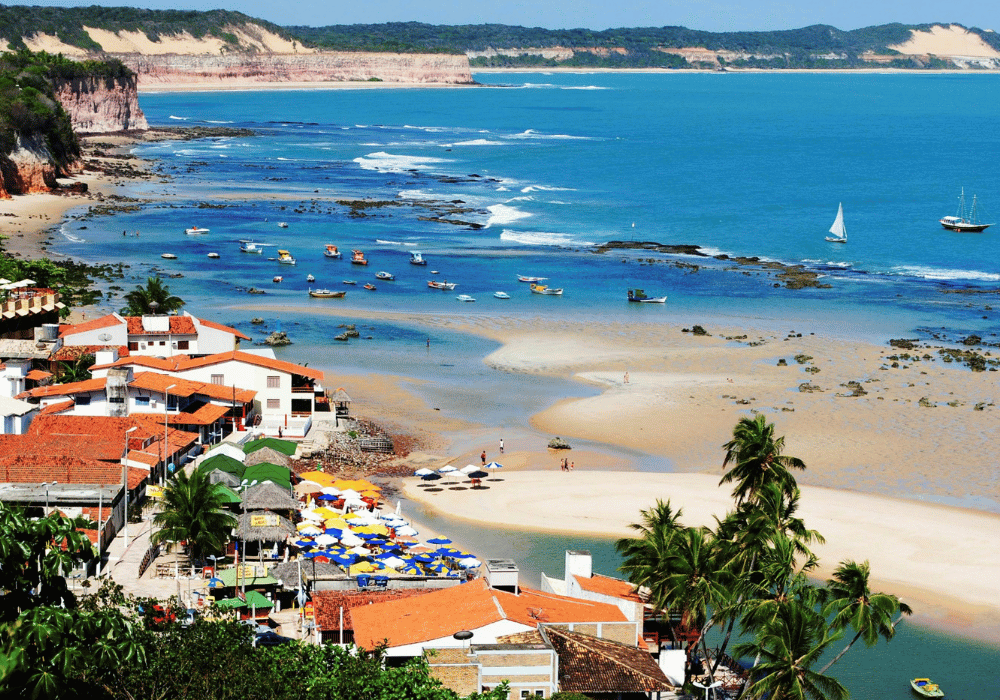
Living in Brazil begins with the same sequence for everyone. Your work visa, your registration with the Federal Police, your migrant identity card, your tax number and your bank account arrive in that order, and each one is requested by the next. Where people diverge is settling in, and a family adds schooling and neighbourhood choice to the list. This guide sets out each step in the order you will meet it, with separate settling-in advice for individuals and for families.

Living in Brazil in 2026: What to expect
Brazil is the largest economy in Latin America and a regional headquarters location for many multinational employers, with São Paulo as the commercial centre and Rio de Janeiro, Belo Horizonte, Curitiba and Brasília also hosting significant corporate populations. Two things define the first year. Portuguese is genuinely necessary, since English is less widely spoken than in many destinations and administration is conducted entirely in Portuguese.
For everything to organise before and after the move in a structured, phase-by-phase format, see our expat checklist.
Work visas and residence permits for Brazil
A temporary residence authorisation is your legal basis to work in Brazil, and it is employer-led rather than applied for independently. The sponsoring company files with the Ministry of Justice before the visa is issued at a consulate abroad.
For a detailed breakdown of each pass category, eligibility requirements and application timelines, see our work permits for Brazil guide.
| Route | Who it is for and what to know |
|---|---|
| VITEM V, temporary work visa | The main employer-sponsored route for foreign nationals with a contract with a Brazilian entity. Valid for up to two years and renewable, with a route to permanent residence afterwards. The employer must hold a valid corporate registration and meet workforce proportionality rules. |
| Technical assistance and technology transfer | For short and medium-term technical work, training and knowledge transfer, where the employment relationship stays with the company abroad. |
| Executive and investor authorisation | For directors, managers and administrators appointed by a company in Brazil, and for those making a qualifying investment. Conditions differ from the standard work route. |
| VITEM XIV, digital nomad | For remote workers employed or contracted by an organisation outside Brazil. Granted for one year and renewable, and it does not permit work for a Brazilian employer. |
| Mercosur residence | Available to nationals of Mercosur member and associated states, offering a simplified residence route with full work rights. |
Federal Police registration, CPF and banking
Registration with the Federal Police is required within ninety days of arrival and produces your national migration registry number and your migrant identity card, the CRNM. Until that is complete you are not fully documented, and late registration attracts a fine and complicates everything downstream. The CPF, the individual taxpayer number issued by the federal revenue service, is the document Brazilian daily life asks for most often, since it is needed to open a bank account, sign a rental contract, take a mobile phone plan and make significant purchases.
Finding somewhere to live in Brazil

Rental contracts in Brazil require a financial guarantee, and this is the point that most often delays new arrivals. Landlords typically ask either for a guarantor who owns property in Brazil, for a rental insurance policy taken out by the tenant, or for a deposit of up to three months of rent, and rental insurance is usually the practical option for a new arrival.
For a full breakdown of how international household goods moves work, see our guide on moving household goods internationally.
Healthcare and insurance in Brazil

Brazil operates a universal public health system, the SUS, available to everyone including foreign residents, alongside a large and well-regarded private sector. Most relocating employees use private hospitals and clinics through a health plan, the plano de saúde, which is a standard employment benefit and is worth confirming as part of your package. Private plans vary considerably in the network of hospitals they cover, so check which facilities are included in the city where you will live rather than nationally.
For a broader guide to the full range of insurance products expats need when living abroad, see our guide on insurance for expats.
Understanding Brazilian tax basics

Tax residency in Brazil begins on arrival for holders of a permanent or work-based residence authorisation, and for others after one hundred and eighty-three days of presence within a twelve-month period. Once you are tax resident, worldwide income is reportable in Brazil at progressive rates. The tax year follows the calendar year and the annual declaration is filed in the spring for the previous year, with employment income withheld monthly through payroll. Assets held abroad above defined thresholds are also reportable.
For a detailed guide on how expatriate tax compliance works across jurisdictions, see our expatriate tax compliance guide.
Cost of living in Brazil in 2026
Cost of living in Brazil is moderate by international standards, with São Paulo the most expensive market and considerable variation between neighbourhoods within the same city. Mercer, ECA International and AIRINC publish cost of living research used by mobility teams to compare locations, and the ranges below are indicative for 2026.
| Cost area | Indicative monthly range in 2026 |
|---|---|
| Rent, one-bedroom in central São Paulo or Rio de Janeiro | Around 3,500 to 6,500 reais in sought-after neighbourhoods, before condominium fees |
| Condominium fees and property tax | Frequently 800 to 2,000 reais on top of rent, and usually paid by the tenant |
| Rent, one-bedroom in Curitiba, Belo Horizonte or Porto Alegre | Around 2,000 to 3,500 reais |
| Groceries, single person | Around 1,200 to 2,000 reais, with local markets cheaper than supermarkets |
| International school fees | A major annual cost and often the largest single line in a family package |
Culture and daily life in Brazil

Brazilian working culture is warm, relationship-led and comparatively informal in tone while remaining hierarchical in structure. Time invested in building personal rapport with colleagues and counterparts is the foundation of getting things done, and conversation before business is expected rather than a delay. Portuguese is essential, Spanish is not a substitute, and even early-stage Portuguese changes how quickly you settle. Timekeeping is flexible in social settings and firmer in corporate ones, so take the lead from your workplace.
For more on how organisations can support expatriate wellbeing throughout an assignment, see our guide on promoting work-life balance for expatriates.
Settling in as an individual
Settling in alone depends heavily on your city. São Paulo offers the deepest professional market, the widest cultural scene and the largest international community, at the highest cost and with the longest commutes, while Rio de Janeiro combines corporate employment with coastline and a strong outdoor life. Curitiba, Belo Horizonte, Florianópolis and Porto Alegre are more affordable, more compact and popular with those prioritising quality of life. Portuguese classes are the single best investment in your first months and are also a reliable way to meet people.
For more on the mental health dimension of international assignments and what organisations should be providing, see our guide on expat mental health during international assignments.
Settling in as a family
Settling in as a family centres on schooling, and the choice of school usually determines the neighbourhood. International and bilingual schools following American, British and International Baccalaureate curricula are concentrated in São Paulo and Rio de Janeiro, with a smaller number in Brasília, Curitiba and Belo Horizonte, and places at established schools are limited enough that early application matters. Private Brazilian schools are also widely used by international families and offer a route into local friendships, with instruction in Portuguese. Buildings with children’s facilities and on-site security are the norm in the larger cities.
For a full breakdown of how dependent visa applications work and what rights family members hold in the host country, see our guide on what happens to your dependent’s visa when you relocate for work.
Moving to Brazil as a company assignee

Where an employer relocates you to Brazil, most of the steps in this guide are coordinated rather than left to you to arrange alone. If you are still weighing whether to accept the offer, our guide on should you accept an international assignment? covers the questions worth raising before you decide.
Companies commonly work with a relocation management company that brings together the immigration lawyer, the tax adviser, the destination services provider and the household goods provider, so that your work authorisation, Federal Police registration, housing and shipment connect in the right order.
The MOVEPLUS™ platform gives the mobility team a single view of key dates, documents and approvals through our relocation service coordination and the MOVEPLUS™ dashboard shows where each step sits at any point, which matters where COMPASS is reassessed in full at every renewal and where a qualifying salary increase can affect an existing assignment.
Get in touch to find out how MovePlus can support your Brazil relocation.
Frequently asked questions
1. What is the first thing to do when I arrive in Brazil?
Register with the Federal Police within ninety days of arrival to obtain your national migration registry number and your migrant identity card, the CRNM. Apply for your CPF taxpayer number at the same time, since it is needed for a bank account, a rental contract and a mobile phone plan.
2. Do I need to speak Portuguese to live in Brazil?
Yes, in practical terms. English is less widely spoken than in many destinations and administration, housing and healthcare are conducted in Portuguese. Spanish is not a substitute. Even early-stage Portuguese changes daily life considerably, and classes are also a reliable way to meet people.
3. What do landlords in Brazil ask for?
Rental contracts require a financial guarantee, usually a guarantor who owns property in Brazil, a rental insurance policy taken out by the tenant, or a deposit of up to three months of rent.
4. How much does it cost to live in Brazil in 2026?
A one-bedroom apartment in a sought-after neighbourhood of São Paulo or Rio de Janeiro ranges from around 3,500 to 6,500 reais a month before condominium fees, which typically add 800 to 2,000 reais and are usually paid by the tenant.
MovePlus Research Desk
AuthorRecent Blogs
- Living in Brazil as an expat in 2026: Culture, daily life and practical considerations
- Living in the Netherlands as an expat in 2026: Housing, daily life and what to expect
- Living in India as an expat in 2026: What relocating employees need to know
- Living in France as an expat in 2026: Language, culture and practical setup
- Living in Canada as an expat in 2026: What to know before you arrive
Ready to Transform Your Global Mobility Strategy?
Connect with our mobility experts to discuss how MOVEPLUS™ can streamline your international talent management and relocation processes.