Moving to the UAE from the UK: A 2026 guide for relocating employees
Author: MovePlus Research Desk

Moving to the UAE from the UK involves the same core paperwork for everyone. The visa and residence process, the Emirates ID, the housing search, the bank account, the health cover and, on the UK side, notifying HMRC are the same milestones whether you arrive as a single professional or with a family. Where you diverge is settling in, and a family carries extra work here, from choosing international schools to picking a community that suits children as well as your commute.
There is also one thing this move asks of you that many others do not. You are setting yourself up in the UAE and closing down correctly in the UK at the same time, and the tax outcome depends on getting the UK side right. This guide walks through each step in the order you will meet it in 2026, with the practical detail UK movers say they wish they had known, the portals and official pages you will actually use, and the points where an employer usually helps.

Moving to the UAE from the UK in 2026: what to expect
A move to the UAE follows a clear sequence, and the order matters because each step tends to unlock the next. Your residence visa and Emirates ID are the foundation, and almost everything else, from your tenancy to your bank account, depends on having them in place.
The draw for many UK movers is straightforward: the UAE has no personal income tax, so your salary is paid gross. The part that catches people out is the UK side. Simply arriving in the UAE does not end your UK tax position, so a clean move means planning both the setup here and the exit at home. The sections below take each part in turn.
Work visas and residence permits for the UAE
A residence visa is your legal basis to live in the UAE, and for most employees it is arranged through an employer. The right route depends on how you are moving and your circumstances, and the main options in 2026 are set out below.
| Route | Who it is for and what to know |
|---|---|
| Standard employment visa | The most common route. Your employer sponsors your residence, applies through the Ministry of Human Resources and Emiratisation, and the visa is tied to that employer. Valid for two years and renewable. If you move with a company, this is usually your route and the employer handles it. |
| Green Visa | A five-year self-sponsored residence for skilled employees classified at the higher skill levels, as well as freelancers and investors. It is not tied to a single employer, which gives you more flexibility if your role or plans change. |
| Golden Visa | A ten-year self-sponsored residence for high earners, specialists and investors. From 2026 the skilled professional route uses a basic monthly salary threshold of 30,000 dirhams. It is independent of any employer and lets you sponsor your family for the same period. |
One point that surprises people: with a Green or Golden Visa you still need a separate work permit from the Ministry of Human Resources and Emiratisation before you can take a salaried role, since residence and the right to work are governed separately. If your company relocates you, it sponsors the standard employment visa and its public relations officer handles the application, so much of this step is arranged for you. An immigration lawyer or a licensed typing centre can confirm the right route where your situation is less standard.
For a detailed breakdown of each visa category, eligibility requirements and application timelines, see our dedicated work permits for the UAE guide.
Useful official links
- The official UAE Government portal: https://u.ae
- Federal Authority for Identity, Citizenship, Customs and Port Security (ICP): https://icp.gov.ae
- Ministry of Human Resources and Emiratisation (MOHRE): https://www.mohre.gov.ae
The arrival process: medical, Emirates ID and residence visa
Your first weeks in the UAE are taken up with completing your residency, and the steps run in a set order. Before you travel, your employer arranges an entry permit. After you arrive, you complete a medical fitness test, then attend biometrics and apply for your Emirates ID, which must be done within 15 days of arrival. Your employer submits your labour contract, health insurance is put in place, and your residence visa is then issued.
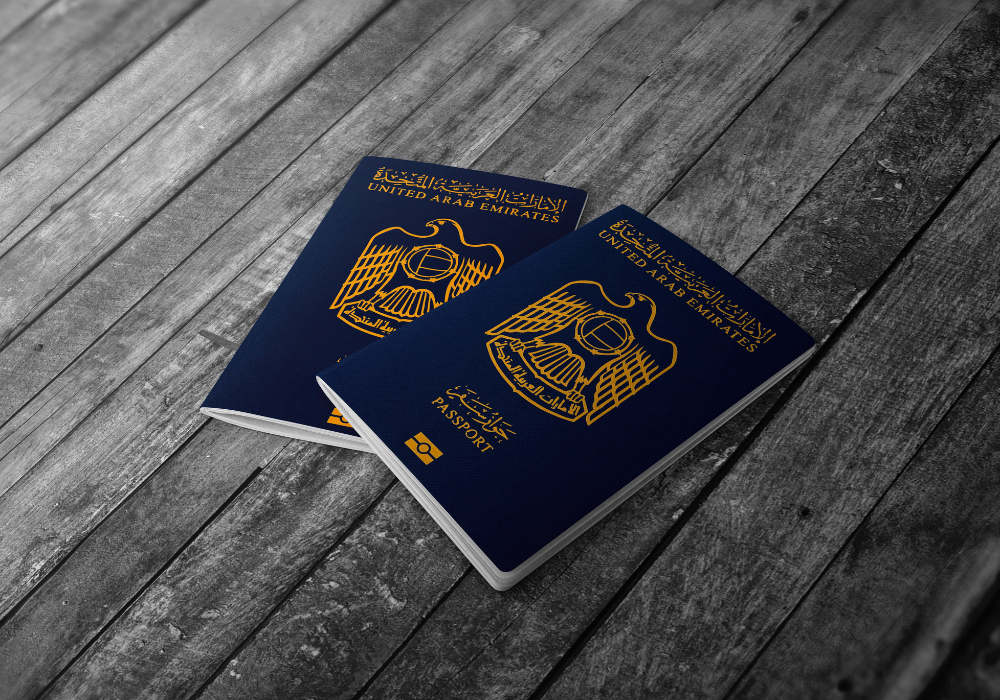
Since 2021 the residence visa is issued electronically rather than stamped in your passport, so keep your digital records to hand. Your Emirates ID is the document you will use most, since it is required to open a bank account, sign a tenancy, access healthcare and set up utilities.
Finding somewhere to live
The rental search is one of the larger tasks of your move, and it works differently from the UK in a few ways worth knowing before you start. The main portals are Bayut, Property Finder and Dubizzle, and it is worth setting up alerts and viewing in person rather than committing from abroad.
The biggest difference for a UK mover is how rent is paid. Landlords typically ask for the year’s rent upfront across a small number of cheques, often between one and four, so plan your cash flow around that. You can usually negotiate more cheques, which eases the pressure in your first year.
Where your employer provides a housing allowance or arranges support through a destination services provider, viewings and paperwork may be organised for you, which is a real advantage while you are still finding your feet.
- Budget beyond the rent itself: an agency fee of about five per cent of the annual rent, a deposit of about five per cent, and a municipality housing fee of five per cent added to your utilities bill in Dubai.
- In Dubai, register your tenancy through Ejari, which makes the contract official and is needed for your utilities and visa steps.
- Watch for district cooling charges, sometimes billed separately from your rent, which rise sharply through the summer.
- Start with a short-term furnished rental while you learn the neighbourhoods, then sign a longer tenancy once you know where you want to be.
- Use the official rental index to check whether an asking rent is in line with the area before you commit.
Opening a UAE bank account
A UAE bank account is needed to receive your salary and manage regular payments, and you will usually need your Emirates ID and a tenancy contract to open one. Some banks can begin the process once your residence visa is issued and complete it when your Emirates ID arrives.
Keep your UK bank account open when you move. You are likely to need it for any HMRC refund, for ongoing UK commitments, and as a sterling account you can draw on. Closing it in haste is one of the more common regrets UK movers mention.
Healthcare and insurance

Health insurance is a legal requirement across all seven emirates, and your residence visa cannot be issued or renewed without it. Since January 2025 the requirement is nationwide, having previously applied mainly in Dubai and Abu Dhabi. Your employer must provide cover for you as the employee, and the minimum policy carries an annual benefit limit of 150,000 dirhams, covering inpatient, outpatient, emergency and specialist care.
One point for families: employer cover does not always extend to dependants, and the rules vary by emirate, so confirm in writing whether your spouse and children are included or whether you need a separate policy. Dubai is regulated by the Dubai Health Authority, Abu Dhabi by the Department of Health, and the Northern Emirates by the Ministry of Health and Prevention. On the UK side, remember to deregister with your NHS GP when you leave.
For a broader guide to the range of insurance products expats need when living abroad, including health, contents and personal liability cover, see our guide on insurance for expats.
Useful official links
- Dubai Health Authority: https://www.dha.gov.ae
- Health insurance information, UAE Government portal: https://u.ae
Tax: what leaving the UK means for you

The UAE has no personal income tax, no capital gains tax on personal assets and no inheritance tax, so your UAE earnings are yours in full. Value added tax applies at five per cent on most goods and services. That is the straightforward part.
The part that needs care is your UK position, because moving to the UAE does not automatically make you UK non-resident. Your status is decided by the Statutory Residence Test, which looks at the number of days you spend in the UK and your ties here. Broadly, you are automatically non-resident if you spend fewer than 16 days in the UK in the tax year, or fewer than 46 if you were not UK resident in the previous three years, but ties such as a home, family or work in the UK can change the picture. You notify HMRC using form P85, or the residence pages if you complete a Self Assessment return.
A few things continue after you leave. Income from a UK property remains taxable in the UK, and the temporary non-residence rule can bring certain gains back into UK tax if you return within five years. Pension planning is genuinely complex and has changed in recent years. Because the cost of getting this wrong is high, a cross-border tax adviser who understands both systems handles your specific position. MovePlus does not provide tax advice, and the official UK guidance is a sensible starting point before you speak to one.
For a detailed guide on how expatriate tax compliance works across jurisdictions, see our expatriate tax compliance guide.
Useful official links
- Statutory Residence Test guidance (RDR3), gov.uk: https://www.gov.uk/government/publications/rdr3-statutory-residence-test-srt
- Get your Income Tax right if you are leaving the UK (P85), gov.uk: https://www.gov.uk/government/publications/income-tax-leaving-the-uk-getting-your-tax-right-p85
- Living in the United Arab Emirates, gov.uk: https://www.gov.uk/guidance/living-in-the-united-arab-emirates
Cost of living in the UAE in 2026
Your cost of living in the UAE depends heavily on the emirate you choose, with rent and, for families, school fees the largest expenses. Mercer, ECA International and AIRINC all publish cost of living research that mobility teams use to compare locations, and the ranges below give an indicative picture for 2026. Treat them as a starting point and build your own budget around your city and lifestyle.
| Cost area | Indicative range in 2026 |
|---|---|
| Rent, one-bed in Dubai | Around 5,500 to 7,500 dirhams a month in central areas such as Downtown or Marina |
| Rent, one-bed in Abu Dhabi | Around 5,000 to 6,800 dirhams a month |
| Rent, one-bed in Sharjah | Around 2,500 to 3,500 dirhams a month, a common commuter choice |
| Upfront housing costs | An agency fee and deposit of about five per cent each, plus a municipality housing fee of five per cent of annual rent |
| Utilities and cooling | Around 600 to 1,000 dirhams a month, with separate district cooling charges in some buildings, highest in summer |
| School fees, per child | Roughly 20,000 to 100,000 dirhams a year at private international schools |
As a rough guide, a single professional in Dubai or Abu Dhabi often budgets somewhere between 12,000 and 18,000 dirhams a month for a comfortable lifestyle, while a family of four commonly needs 35,000 to 45,000 dirhams, largely because of school fees and larger housing. With rent typically paid in a small number of cheques upfront, plan the first-year cash flow carefully. Because there is no personal income tax, your take-home is your gross salary, which changes the maths considerably compared with the UK.
Before you leave the UK: the practical checklist
Some of the most important steps of this move happen in the UK before you go, and several are far easier to complete at home than from abroad. Work through these alongside your visa and housing arrangements.
- Notify HMRC that you are leaving, using form P85, and tell your council, your pension provider and the Student Loans Company if relevant.
- Keep a UK bank account open for any HMRC refund and ongoing UK payments.
- Get key documents legalised before you travel, including your degree, marriage and birth certificates, through the Foreign, Commonwealth and Development Office and the UAE embassy, since this is slower and harder to arrange once you have left.
- Arrange your household move with a household goods provider. Sea freight from the UK to Jebel Ali typically takes around three to five weeks, plus packing and customs clearance at each end.
- Once you have your Emirates ID, convert your UK driving licence at the Roads and Transport Authority or the relevant emirate authority. UK licences are eligible for direct exchange without a driving test.
- Read the official UK guidance for British nationals living in the UAE so you know what to register and what to expect.
For a full breakdown of how international household goods moves work from pre-move survey to customs clearance and delivery, see our guide on moving household goods internationally and our expat checklist covers everything to organise before and after the move in a structured, phase-by-phase format.
Useful official links
- Roads and Transport Authority (RTA), for driving licence exchange: https://www.rta.ae
- Living in the United Arab Emirates, gov.uk: https://www.gov.uk/guidance/living-in-the-united-arab-emirates
Settling in as an individual
Settling in on your own is mostly about community, cost and lifestyle, and your choice of emirate and neighbourhood shapes all three. English is widely spoken in business and daily life, which makes the early weeks easier than in many destinations. That said, even a basic familiarity with Arabic goes a long way in building relationships and navigating daily life. See our Arabic language guide for expats for a practical introduction.
Dubai has the largest international community and areas such as the Marina, Jumeirah Lakes Towers and Downtown are popular with younger professionals. Abu Dhabi offers a quieter, greener pace with strong roles in energy, government and finance. Sharjah is a more affordable commuter option with a more traditional character. Shared apartments and villa rooms are common and keep costs down, and networks such as InterNations, sports clubs and interest groups help you build a circle quickly. Plan for the summer, when daily life moves indoors from roughly May to September.
Settling in as a family
Settling in as a family adds schooling to the top of your list, and it often drives both your timing and your choice of neighbourhood. Most expatriate children attend private international schools, and the British curriculum is widely available, which gives UK families useful continuity. Fees are significant, from roughly 20,000 to more than 100,000 dirhams a year, and popular schools have waiting lists, so apply as early as you can. Schools are regulated by KHDA in Dubai and by the Department of Education and Knowledge in Abu Dhabi, and their inspection ratings are a helpful guide. For a broader look at how organisations structure family relocation support, see our guide on expat relocation: supporting employees and families abroad.
Family-friendly communities such as Arabian Ranches, Mirdif and the Jumeirah areas in Dubai, and Al Reef and Khalifa City in Abu Dhabi, are popular for their villas, parks and safety. As the employee, you can sponsor your spouse and children once your own residency is in place, subject to a minimum salary. Confirm early whether your employer’s health cover extends to your family, since in some emirates you will arrange a separate policy.
For a full breakdown of how dependent visa applications work and what rights family members hold in the host country, see our guide on what happens to your dependent’s visa when you relocate for work.
Useful official links
- KHDA, Dubai schools and ratings: https://www.khda.gov.ae
What happens when you move via a company as an assignee
If your employer relocates you to the UAE as an assignee, most of the steps in this guide are coordinated for you rather than left to you alone. Companies often work with a relocation management company that brings together the immigration handling, the tax adviser, the destination services provider and the household goods provider, so your visa, home search, registration and shipping connect in the right order.
The MOVEPLUS™ platform gives the mobility team a single view of your key dates, documents and approvals, which means fewer gaps for you to chase and clearer answers when a deadline or a document is due through our relocation service coordination. The steps are the same ones set out above, so even where support is in place, understanding the sequence helps you know what is happening and when. If you are moving on your own, that same understanding puts you in control, since you can plan each step knowing what depends on what.
Get in touch to find out how MovePlus can support your UAE relocation.
Frequently asked questions
1. Do I pay income tax in the UAE?
No. The UAE has no personal income tax, so your salary is paid gross. The important point for a UK mover is that arriving in the UAE does not automatically end your UK tax position. Your status is decided by the Statutory Residence Test, and you notify HMRC using form P85.
2. What visa do I need to work in the UAE?
Most employees move on a standard employment visa, sponsored and arranged by their employer and tied to that company. Self-sponsored options include the five-year Green Visa and the ten-year Golden Visa, though with these you still need a separate work permit to take a salaried role.
3. How long does the UAE visa and Emirates ID process take?
The employment visa process usually takes around two to four weeks. After you arrive you complete a medical fitness test and apply for your Emirates ID within 15 days. Your employer handles most of the steps and covers the costs.
4. Is health insurance mandatory in the UAE?
Yes, across all seven emirates, and your residence visa cannot be issued without it. Your employer must provide cover for you as the employee, with a minimum annual benefit of 150,000 dirhams. Confirm in writing whether your family is included, as this varies by emirate.
5. Can I use my UK driving licence in the UAE?
UK licences are eligible for direct exchange without a driving test. Once you are resident and have your Emirates ID, you convert your licence at the Roads and Transport Authority or the relevant emirate authority.
6. Can my family move to the UAE with me?
Yes. Once your residency is in place you can sponsor your spouse and children, subject to a minimum salary. The British curriculum is widely available in private international schools, though fees are significant and popular schools have waiting lists, so apply early.
MovePlus Research Desk
AuthorReady to Transform Your Global Mobility Strategy?
Connect with our mobility experts to discuss how MOVEPLUS™ can streamline your international talent management and relocation processes.