Moving household goods internationally: What the process looks like and what to expect
Author: MovePlus Research Desk
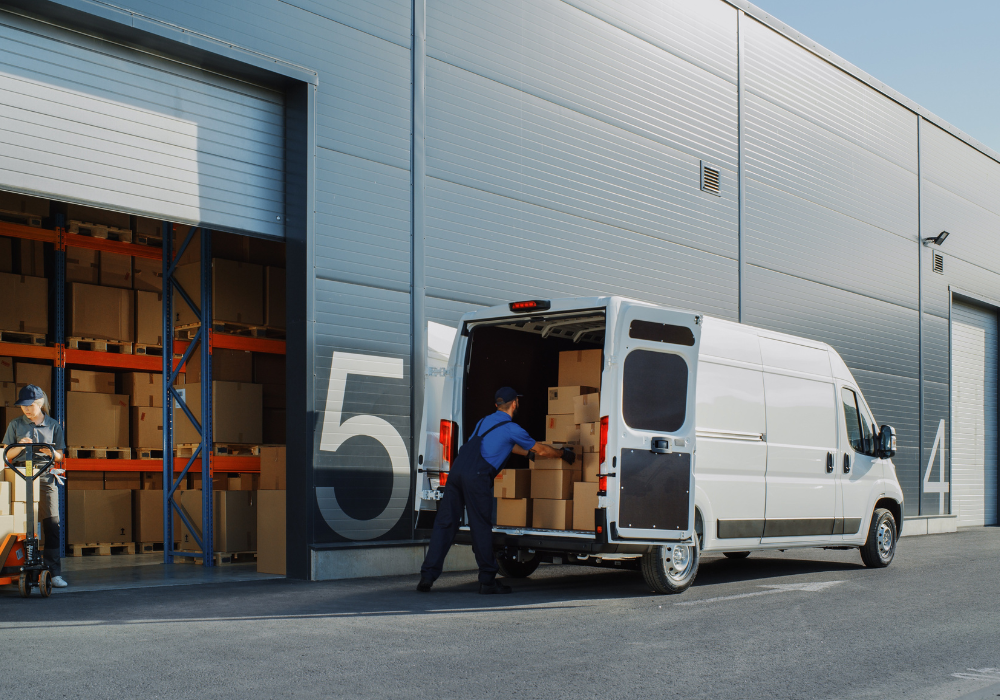
Moving your belongings to another country runs through five main stages: a pre-move survey at your current home, quotation and approval, packing and export clearance, shipping by air or sea, then import clearance and delivery at the other end. How long it takes depends on your route, your shipping method, and how quickly customs paperwork clears at each end.
Two organisations handle it between them. A specialist international moving company, often called a household goods (HHG) provider, packs, ships and clears your goods. If your move is being managed by a relocation management company, such as MovePlus, then they appoint the HHG provider from their global partner network, check the quote against what your employer’s policy covers, and coordinate the shipment alongside the rest of your move. With MovePlus, your Relocation Advocate is your point of contact throughout.
Knowing what happens at each stage, and what your policy pays for, is the best protection against the most common sources of delay and unexpected cost.
For a full breakdown, have a read of our complete guide: The complete guide to international employee relocation: what to expect when your company moves you abroad

The household goods provider: their role in your relocation
A household goods (HHG) provider is a specialist international moving company appointed to handle the physical movement of your possessions. In a corporate relocation they are appointed either directly by your employer or by the relocation management company (RMC) running the programme.
The HHG provider manages:
- The pre-move survey at your current home, and the quotation that follows it
- Packing and loading at origin, including specialist packing for fragile or high-value items
- The valued inventory form you complete for insurance cover
- Customs documentation and clearance at both origin and destination
- The international shipping itself, by air, sea or road
- Storage at either end if your timings do not line up
- Delivery, unpacking and removal of packing materials at your new home
- Damage and loss claims
The employee’s direct point of contact during the move is the household goods provider’s move coordinator. Most questions about packing, shipment timelines, and delivery should be directed to them. The relocation management company maintains oversight of the household goods process as part of the overall programme coordination.
For the full breakdown, read our guide: Corporate relocation checklist
On international moves they work with a partner company in your destination country, who handles the arrival end. Most HHG providers assign you a move coordinator, and that person holds the operational detail: packing dates, container space, sailing schedules, delivery windows.
Where a relocation management company is involved, you get a second layer of management above the move itself. The RMC appoints the HHG provider from its vetted partner network, checks the quote against what your employer’s policy covers, and approves the shipment before it is booked. It then coordinates with the move coordinator on your behalf and passes updates back to you, so you are not chasing a supplier for information or working out for yourself whether something falls inside your policy.
Most RMCs assign each employee a named contact for this. Titles vary between companies. At MovePlus the role is the Relocation Advocate, and they stay with you across the whole relocation rather than the shipment alone, tracking the move in MOVEPLUS™ alongside your visa, accommodation and expenses. They tell you what your policy covers before decisions get made, chase the paperwork that has to come from you, and step in if the shipment runs into trouble.

The pre-move survey
The first stage of the household goods process is a pre-move survey carried out by a representative of the household goods provider. This takes place at the employee’s origin property and has two purposes: to assess the volume and nature of goods to be shipped, and to confirm what the policy covers.
The survey is also the point at which the household goods provider advises on items that cannot be shipped due to destination country import restrictions, items that require specialist packaging, and any goods that may be subject to customs duties or restriction at the destination.
Restricted categories commonly include: foodstuffs and perishables, plants and soil, certain medications, firearms and weapons (including decommissioned items), and items that require specific import permits in the destination country. The list varies by destination and should be confirmed with the household goods provider at the survey stage.
Quotation and approval
After the survey, your moving company issues a quote based on the surveyed volume. MovePlus reviews it against your policy allowance and confirms what is approved before anything is booked. If the survey comes in above your allowance, MovePlus will tell you what the overage would cost and what your options are, including shipping less or requesting an exception. You will know the position before packing day, not after.
Shipping methods: air freight and sea freight

| Shipping method | Key characteristics |
| Air freight | Typically used for smaller volumes, fragile items, or urgent shipments. Significantly faster than sea freight but is charged on weight rather than volume, which makes it considerably more expensive than sea freight Often used for an initial essentials shipment while the main sea shipment with the majority of belongings is in transit. |
| Sea freight (full container) | Used for large-volume household moves. A full 20ft or 40ft container is allocated to the employee’s goods. Transit times vary by route and are typically provided as door-to-door delivery time, including packing, sailing time, customs clearance at both ends. Moving company will confirm delivery time at survey. |
| Sea freight (shared container) | The employee’s goods share container space with other shipments, known as groupage or Less than Container Load (LCL). Lower cost than a dedicated container. Transit times are similar but may involve consolidation delays. |
| Road freight | Applicable for intra-European moves or moves between geographically connected countries. Faster than sea freight for medium volumes. |
The shipping method applied to your move will be determined by your policy and the volume of goods confirmed at the pre-move survey. Where the policy allows both an air freight essentials shipment and a main sea freight consignment, the air freight shipment is typically packed and collected first.
Customs documentation and clearance
Most international moves need customs clearance twice: once to export from the country you are leaving, and again to import into the country you are arriving in. Moves within a shared customs area, such as between EU member states, are the exception.. The household goods provider manages the customs submission but the employee is required to provide supporting documents at specific points.
Documents commonly required for international household goods customs clearance include: a copy of the work visa or residency permit for the destination country, a detailed inventory of goods being shipped (prepared by the household goods provider), a customs declaration form, and in some countries, a certificate of change of residence or an employer letter confirming the assignment.
Import duties on household goods vary by destination country. Most countries offer duty relief for people relocating for work, but relief is conditional rather than automatic. Conditions vary by country and commonly include a minimum period you must have owned and used the goods, a deadline for importing them after you arrive, and a restriction on selling them for a period afterwards. New or unused items usually fall outside the relief. In several countries, including the UK, the relief has to be applied for and approved before your goods arrive, and you are the applicant rather than your moving company. Ask about this at the survey, do not wait until the container is at sea. The household goods provider advises on what applies for your specific destination and what documentation is required to support the duty exemption claim.
Customs delays are not uncommon and are one of the most frequent causes of shipment timelines extending beyond the initial estimate. Building contingency into accommodation planning for the period between arrival and delivery of goods is advisable.
Delivery and unpacking at the destination

Once customs clearance is complete at the destination, the household goods provider’s local partner coordinates delivery to the destination property. For full-service moves, professional unpacking and debris removal are included. The employee is typically asked to be present at delivery to sign off on the condition of goods received.
If your new home is not ready when your goods arrive, they can be held in storage at the destination until you can take delivery. Most policies include a set period of storage. Your Relocation Advocate will confirm what yours allows and what happens if you need longer.
Any damage claims should be reported to the household goods provider within the timeframe specified in the shipment documentation. Your shipment is covered under an all-risk policy arranged as part of the move, but the cover only works if you complete a valued inventory before packing. This is a list of what you are shipping with a replacement value against each item. Anything you leave off, or undervalue, is what you will be paid for if it is lost or damaged. Your moving company issues the form but the values have to come from you..
What your employer’s policy covers and what it does not
Typically covered: Professional packing and loading, standard international shipping within the defined volume allowance, origin and destination customs documentation, standard transit insurance, and delivery and unpacking.
Commonly excluded: Additional insurance for high-value items (jewellery, art, antiques), storage costs beyond a defined period, shipping of motor vehicles (which involves separate import regulations), items restricted by destination customs, and any overage above the policy volume allowance.
High-value items should be declared to the household goods provider at the pre-move survey stage. Separate specialist insurance arrangements may be available, and the household goods provider will advise on whether specific items require specialist packaging or separate handling.
How MovePlus coordinates your household goods move

MovePlus works with specialist household goods providers as part of the international relocation programme coordinated through MOVEPLUS™. For HR and mobility teams supporting employees relocating, MovePlus manages every element of the move through our relocation service coordination offering from destination services and cultural training to settling-in support.
Speak to the MovePlus team to understand how the household goods process is integrated within the MOVEPLUS™ programme framework for your assignee population.
MovePlus Research Desk
AuthorRecent Blogs
- Your relocation policy explained: What it typically covers and what to ask
- What relocation assistance means when it appears in a job advert
- Living in Malaysia as an expat in 2026: Visa rules, daily life and costs
- Living in Brazil as an expat in 2026: Culture, daily life and practical considerations
- Living in the Netherlands as an expat in 2026: Housing, daily life and what to expect
Ready to Transform Your Global Mobility Strategy?
Connect with our mobility experts to discuss how MOVEPLUS™ can streamline your international talent management and relocation processes.