Living in India as an expat in 2026: What relocating employees need to know
Author: MovePlus Research Desk

Living in India follows the same administrative sequence for everyone. Your employment visa, your registration with the Foreigners Regional Registration Office, your PAN card, your bank account, your housing agreement and your tax position arrive in that order, and the first two are time-bound in a way that catches new arrivals out. Where people diverge is settling in, and a family adds school admissions and household support to the list. This guide sets out each step in the order you will meet it, with separate settling-in advice for individuals and for families.
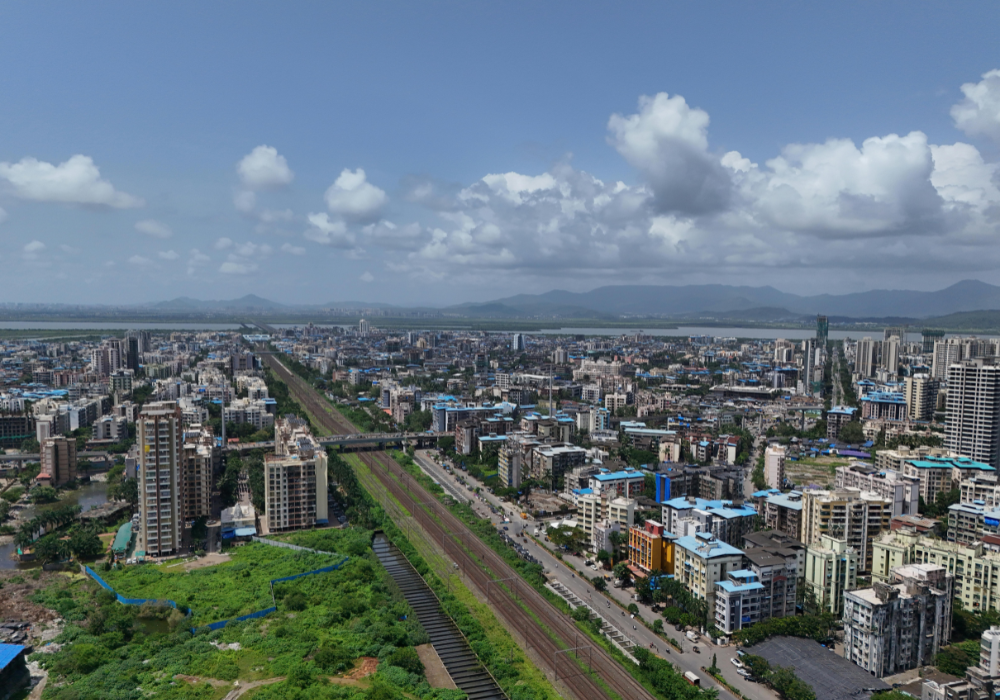
Living in India in 2026: What to expect
India is one of the fastest-growing major economies and hosts the global capability centres of a large share of multinational employers, which makes it a common destination for senior technical, finance and operations roles. English is widely used in business, higher education and government, which removes a barrier that exists in many destinations.
Work visas and permits for India
An employment visa is the legal basis for paid work in India, and it is sponsored by a registered Indian entity rather than applied for independently. A business visa does not permit employment, and the distinction is enforced.
For a detailed breakdown of each status category, eligibility requirements and application timelines, see our work permits for India.
| Route | Who it is for and what to know |
|---|---|
| Employment visa | The standard route for foreign nationals taking salaried roles with an Indian entity. The gross annual salary must generally be at least 25,000 US dollars, calculated on the total package including accommodation. Issued for one year or the contract length and extendable to five years. |
| Project visa | For foreign nationals working on specified projects in defined sectors such as power and steel, tied to the project rather than to a general employment relationship. |
| Business visa | For meetings, negotiations, trade fairs and market research. It does not permit salaried work or income from an Indian source, and using it for employment carries serious consequences. |
| Entry visa for dependants | Spouses and children accompany the principal applicant on an entry visa. Dependants cannot take up employment on this category and would need their own employment visa to work. |
| Overseas Citizen of India card | For people of Indian origin and their spouses, giving broad rights to live and work in India without a separate employment visa. Often the most practical route for diaspora professionals. |
FRRO registration, PAN and banking
Registration with the Foreigners Regional Registration Office is required within fourteen days of arrival where your stay exceeds one hundred and eighty days, and this is the deadline most new arrivals underestimate. It is completed online through the e-FRRO portal with your passport, visa, photographs, employment letter and proof of address, and must be updated whenever your address changes. A PAN card, the permanent account number issued by the tax authority, is needed for salary, tax filing and most financial transactions. Opening a bank account requires your passport, visa, PAN, registration document and proof of address.
For a detailed guide on how expatriate tax .compliance works across jurisdictions, see our expatriate tax compliance guide.
Finding somewhere to live in India

Housing is arranged through local brokers and property portals, and gated residential developments with power backup, water supply and on-site facilities are the standard choice for relocating employees, with serviced apartments widely used for the first weeks. Deposits are the point that surprises arrivals most, since they vary considerably by city and are often several months of rent, with Bengaluru historically at the higher end. Residential agreements are commonly written as leave and licence agreements for eleven months, and the notice period is worth reading closely.
For a full breakdown of how international household goods moves work, see our guide on moving household goods internationally.
Healthcare and insurance in India
India has a large private healthcare sector with internationally accredited hospitals in every major city, and most relocating employees use private facilities through employer group medical cover. Confirming the level of that cover, and whether it extends to dependants, is worth doing before you travel. Arrange routine vaccinations with a doctor in advance. Practical adjustments matter in the first weeks, including drinking filtered or bottled water and being selective while your digestion adapts.
For a broader guide to the full range of insurance products expats need when living abroad, see our guide on insurance for expats.
Understanding Indian tax basics

Income tax in India is deducted at source from salary, and your liability depends on residential status, which is determined by the number of days you spend in the country rather than by your visa. Crossing the day count thresholds changes what income becomes taxable in India, including income arising abroad. The Indian tax year runs from 1 April to 31 March, and personal returns are generally filed by the end of July for the preceding year, supported by the certificate of tax deducted, Form 16, issued by your employer.
For a detailed guide on how expatriate tax compliance works across jurisdictions, see our expatriate tax compliance guide.
Cost of living in India in 2026
Cost of living in India is low relative to most originating locations, with the exception of two categories that dominate an expatriate budget: housing in prime areas and international school fees. Mercer, ECA International and AIRINC publish cost of living research that mobility teams use to compare locations, and the ranges below are indicative for 2026.
| Cost area | Indicative monthly range in 2026 |
|---|---|
| Rent, serviced two-bedroom in prime Mumbai | Around 150,000 to 300,000 rupees, the most expensive market in the country |
| Rent, two-bedroom in Bengaluru, Gurugram or Hyderabad | Around 60,000 to 150,000 rupees in gated developments popular with international residents |
| Groceries, single person | Around 10,000 to 20,000 rupees, higher for imported goods |
| Household support and transport | Domestic help and a car with driver are common and remain modest relative to originating locations |
| International school fees | A major annual cost, frequently the largest single line in a family package |
Culture and daily life in India

Working relationships in India are built on personal rapport, and time invested in getting to know colleagues before moving to business is time well spent. Organisations tend to be more hierarchical than in many Western markets, so understanding who holds decision-making authority shapes how quickly things progress. Communication is often indirect, and a positive response can indicate willingness to explore rather than firm agreement, so confirming next steps in writing is a useful habit.
For a practical overview of what learning Hindi involves as a relocating professional, see our expat highlight: 10 fun facts about the Hindi language
Settling in as an individual
Settling in alone depends heavily on your city, since each has a different character and a different international community. Bengaluru is the centre of the technology sector with a temperate climate and a large international professional population, Mumbai is the financial and creative capital with the highest housing costs, and Delhi and Gurugram host large corporate and diplomatic communities. Hyderabad, Pune and Chennai combine major employers with lower costs and shorter commutes.
For more on the mental health dimension of international assignments and what organisations should be providing, see our guide on expat mental health during international assignments.
Settling in as a family
Settling in as a family centres on school admissions, which drive both timing and location. International schools following the International Baccalaureate or Cambridge curricula operate in every major city, places at established schools are limited, and admissions cycles run well ahead of the academic year, so applications should begin as soon as the assignment is confirmed. Proximity matters more than in most destinations, since traffic can turn a short distance into a long journey, and families commonly choose housing on the basis of the school run.
For a full breakdown of how dependent visa applications work and what rights family members hold in the host country, see our guide on what happens to your dependent’s visa when you relocate for work.
For a broader look at how organisations structure family support within a relocation programme, see our guide on expat relocation: supporting employees and families abroad.
Moving to India as a company assignee
Where an employer relocates you to India, most of the steps in this guide are coordinated rather than left to you to arrange alone. If you are still weighing whether to accept the offer, our guide on should you accept an international assignment? covers the questions worth raising before you decide.
Companies commonly work with a relocation management company that brings together the immigration lawyer, the tax adviser, the destination services provider and the household goods provider, so that your visa, registration, housing, school applications and shipment connect in the right order. The MOVEPLUS™ platform gives the mobility team a single view of key dates, documents and approvals through our relocation service coordination.
Get in touch to find out how MovePlus can support your India relocation.
Frequently asked questions
1. Do I need to register with the authorities when I arrive in India?
Yes, if your stay exceeds one hundred and eighty days you must register with the Foreigners Regional Registration Office within fourteen days of arrival, through the e-FRRO portal. Registration must also be updated when your address or personal details change, and missing the deadline carries penalties.
2. What is the minimum salary for an Indian employment visa?
The gross annual salary must generally be at least 25,000 US dollars, calculated on the total remuneration package including the value of accommodation. Narrow exceptions apply to certain roles such as language teachers and staff of some non-governmental organisations.
3. Do I need to speak Hindi to live in India?
English is widely used in business, higher education and government, so most professional and administrative matters can be handled in English. India has twenty-two officially recognised languages and the local language varies by state, so a few phrases in the language of your city are warmly received in daily life.
4. How much does it cost to live in India in 2026?
Daily costs are low relative to most originating locations, but prime housing and international school fees dominate an expatriate budget. A two-bedroom home in a gated development in Bengaluru, Gurugram or Hyderabad ranges from around 60,000 to 150,000 rupees a month, with prime Mumbai considerably higher.
MovePlus Research Desk
AuthorRecent Blogs
- Living in India as an expat in 2026: What relocating employees need to know
- Living in France as an expat in 2026: Language, culture and practical setup
- Living in Canada as an expat in 2026: What to know before you arrive
- Repatriation: What returning employees need to know and what organisations need to provide
- Understanding your work visa as a sponsored employee
Ready to Transform Your Global Mobility Strategy?
Connect with our mobility experts to discuss how MOVEPLUS™ can streamline your international talent management and relocation processes.